
Chhath Puja: Traditional Approach to Sustainable Living and Scientific Wellness
Chhath Puja: Traditional Approach to Sustainable Living and Scientific Wellness
At first glance, Chhath Puja appears as a deeply devotional festival—devotees standing in rivers at sunrise and sunset, offering prayers to Surya. But look a little closer, and it reveals something far more profound. Chhath is a celebration of balance—between humans and nature, discipline and devotion, body and mind. It quietly encodes a way of living that is sustainable, self-aware, and aligned with natural rhythms.
In a time when sustainability and wellness are often treated as modern discoveries, Chhath stands as a reminder that these ideas have long been part of lived traditions.
Living in Harmony with Nature
One of the most striking aspects of Chhath Puja is its simplicity—and that simplicity is deeply intentional.
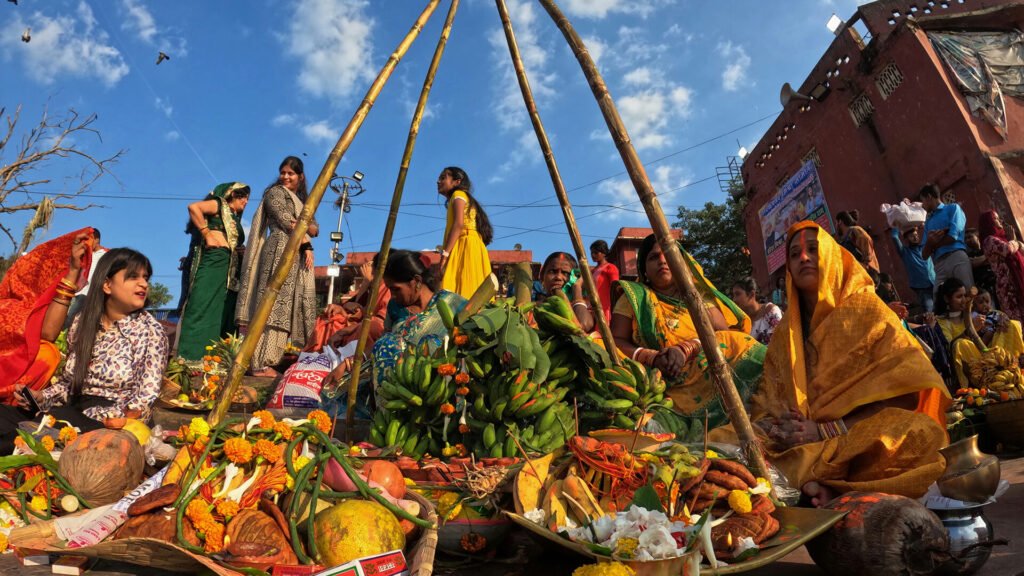
Every element used in the rituals is natural. Bamboo baskets, earthen lamps, seasonal fruits, jaggery, and homemade offerings form the core of the पूजा. There is a noticeable absence of plastic, synthetic decoration, or excess consumption. What remains is a system that is almost entirely biodegradable and local.
This is not accidental. It reflects a way of life where human activity does not overwhelm nature but coexists with it.
Even the choice of location—riverbanks, ponds, and other water bodies—carries meaning. When communities gather to perform rituals in these spaces, they are not just using nature; they are acknowledging it. The cultural importance attached to these water bodies often leads to collective efforts to keep them clean, especially during the festival. In that sense, reverence becomes a tool for conservation.
Food, too, follows the same philosophy. The ingredients used during Chhath are seasonal and locally sourced—sugarcane, rice, fruits, and grains that are naturally available during this time of year. Today, nutrition science increasingly emphasizes seasonal eating for both health and environmental reasons. Chhath has quietly practiced this principle for generations.
At its core, the festival is an act of gratitude. Offering arghya to the Sun is symbolic of recognizing the source of life and energy. It reminds us that our existence is deeply tied to natural systems—something modern lifestyles often make us forget.
Disciplines Lifestyle & Wellness
Chhath is not a passive celebration. It demands participation, preparation, and above all, discipline.
The rituals unfold over several days, gradually guiding the body and mind into a state of restraint. Food becomes simpler, routines become more structured, and attention shifts inward. This transition is not just physical—it is psychological.
In a world driven by convenience and instant gratification, such structured discipline is rare. Chhath offers a framework where restraint is not seen as deprivation but as a form of alignment. It creates space for awareness—of what we consume, how we live, and how we respond to our environment.
One of the most intense aspects of Chhath Puja is the prolonged fast, often lasting between 36 to 48 hours. While it is rooted in devotion, modern research helps us understand what happens within the body during this period.
In the initial phase, the body uses stored glucose (glycogen) for energy. As fasting continues, these reserves begin to deplete, and the body gradually shifts its energy source.
This transition leads to a metabolic state known as Ketosis, where fat becomes the primary fuel. This shift is associated with more stable energy levels and reduced fluctuations in blood sugar.
As the fast progresses, another important process begins to gain prominence—Autophagy. Often described as the body’s internal clean-up system, autophagy helps remove damaged cellular components and recycle them. Research in this area, including work recognized by Nobel-winning studies, has linked this process to cellular health and longevity.
Fasting also influences hormonal balance. Insulin levels drop, which can improve insulin sensitivity over time. Some studies suggest a reduction in inflammatory markers, pointing toward potential benefits for metabolic health.
There are also neurological effects. As the brain begins to use ketones for energy, many people report improved mental clarity and focus. While individual experiences vary, this aligns with emerging research on fasting and brain function.
It is important to note, however, that such extended fasting is not suitable for everyone. It can be physically demanding, especially for individuals with underlying health conditions, nutritional deficiencies, or high physical stress. Practicing such a fast requires self-awareness and, ideally, good baseline health. Listening to one’s body is as important as following tradition.
What Makes Chhath Fasting Different
Fasting today is often associated with weight loss trends or performance optimization. Chhath offers a very different perspective.
Here, fasting is not an isolated health hack. It is part of a larger ecosystem of practices—sun exposure during dawn and dusk, standing in water, mindful rituals, and a strong sense of community participation.
Morning and evening सूर्य अर्घ्य align the body with natural light cycles, which play a role in regulating circadian rhythms. Exposure to early sunlight supports vitamin D synthesis and helps maintain biological clocks that influence sleep and metabolism.
Standing in water for extended periods may also have a calming effect on the nervous system, promoting a state of stillness and focus. Combined with fasting, this creates a unique environment where the body is both challenged and reset.
What emerges is not just physical endurance, but a sense of integration—where physical, mental, and environmental elements come together.
A Holistic Model of Wellness
Chhath Puja does not separate health into compartments. It does not treat the body, mind, and environment as independent systems. Instead, it brings them together in a single, cohesive experience.
The fast supports metabolic reset. The rituals cultivate mental discipline. The connection with nature fosters environmental awareness. Each element reinforces the other.
This is perhaps where its true strength lies. Modern wellness often focuses on isolated interventions—a diet plan, a workout routine, a mindfulness app. Chhath, on the other hand, operates as a system. It is not something one does occasionally; it reflects a philosophy of living.
Relevance in Today’s World
The modern world is facing two parallel challenges—environmental degradation and lifestyle-related diseases. Rising rates of diabetes, obesity, and stress-related disorders are now well documented. At the same time, unsustainable consumption patterns are putting immense pressure on natural resources.
In this context, Chhath feels unexpectedly relevant.
Its emphasis on minimalism and natural materials aligns with sustainable living. Its structured fasting resonates with growing scientific interest in metabolic health. Its focus on discipline and mindfulness offers an antidote to overstimulation and excess.
What was once seen purely as tradition can now be understood as a practical framework for modern living.
Tradition Merges with Science
Chhath Puja is often described as an ancient festival. But perhaps it is more accurate to see it as a living system of knowledge—one that continues to guide behavior, shape communities, and influence well-being.
What appears as ritual is, in many ways, refined wisdom. A way to stay connected to nature. A way to bring discipline into daily life. A way to reset the body without losing sight of the larger ecosystem we are part of.
Sometimes, the most advanced ideas are not new. They are simply remembered.